October 11, 2026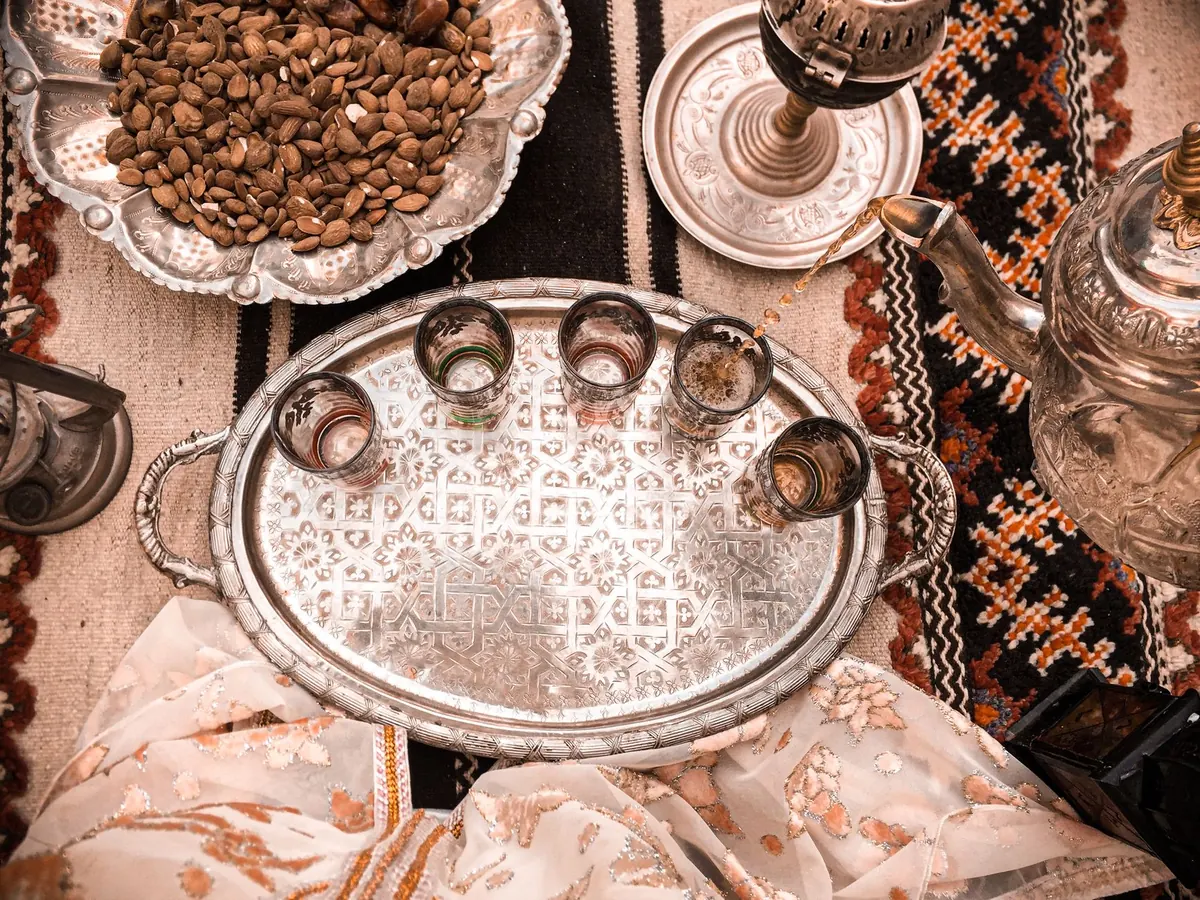
Local Tea Traditions: A Beginner's Guide to British, Japanese, and Moroccan Tea Rituals
Tea is one of the few things nearly every culture has made its own, and each version quietly shows what that culture values. Britain built a meal around it. Japan built a discipline. Morocco built a welcome. The gestures are small — how a bowl is turned, when the milk goes in, how high the pot is lifted — but they are what turn a pleasant drink into something you can share with confidence.
Here is what a beginner needs to know about three of the most distinct tea rituals in the world. None of them is difficult to enter. They are forgiving traditions, and most hosts are pleased rather than offended when a visitor makes an honest attempt. What follows is the practical version: what the ritual is, what you are actually drinking, and the small details that make you look as though you have done this before.
British Tea: A Ritual Built Around Company
Everyday British tea is plain and practical: a teabag, a mug, a kettle clicked off mid-sentence. It is less a ceremony than a social instrument. Tea is offered after bad news, before difficult conversations, and during long silences; "putting the kettle on" is a shorthand for taking care of someone. The formal version — afternoon tea — is a small meal with tea at its centre, commonly credited to Anna, the seventh Duchess of Bedford, who wanted something to fill the long gap between lunch and a late dinner. It became a social occasion, and it still works best that way.
The food usually arrives on a tiered stand, and the order is not random. Savoury finger sandwiches first, then scones with jam and clotted cream, then the small cakes and pastries. High tea, incidentally, is something else entirely: a working family's evening meal with savouries, not a grander afternoon tea. Calling a hotel's afternoon tea "high tea" is a common and forgivable mistake.
Choosing a Blend and Brewing It
English Breakfast is the workhorse, a malty Assam-led blend that takes milk well. Earl Grey is scented with bergamot and is usually better with lemon or nothing at all — milk and citrus together curdle unpleasantly. Darjeeling first flush is light and floral; treat it like a delicate green tea and skip the milk. Lapsang Souchong is the smokiest option and divides a room, though a small amount blended into an English Breakfast makes a fine winter pot.
In a 500 ml pot, use roughly one teaspoon of loose leaf per person plus one for the pot, and steep black blends for three to five minutes. Longer than that and you get the dry, tannic grip people call stewed. Water just off the boil for black tea, around 80°C for green. If you are using a teabag, give it a gentle squeeze against the side of the cup as you lift it out — the British will not say anything, but they will notice a dripping bag left on the saucer.
Table Manners Worth Knowing
The old argument about milk first or milk second is really about porcelain and engineering. Milk went in first when fine china could crack under boiling tea, and pouring milk into hot tea also mixes more evenly than the reverse. Neither is wrong. If you are pouring for guests, pour the tea first and let them add milk, so they can judge the colour themselves.
- Stir gently back and forth rather than in circles. A spoon rung against china is the one sound that genuinely irritates.
- Rest the spoon on the saucer behind the cup, never inside it.
- Hold the handle with thumb and forefinger and let the other fingers curl in. The raised pinky is a cartoon invention, not an English habit.
- Break a scone into pieces with your fingers rather than slicing it in half, then spread jam and cream. In Devon the cream goes first; in Cornwall the jam does. Nobody agrees, and everybody has an opinion.
- Dunk if you like, but at home. At a formal table, leave the biscuit on the saucer between bites.
Japanese Tea: A Discipline of Attention
Where British tea is built around conversation, Japanese tea is built around attention. Chanoyu — the Way of Tea — is a formal practice with a choreography so precise that a single session can last four hours, but the underlying idea is simple: for the length of one bowl of tea, nothing else exists. The host prepares, the guest receives, and both are performing the same act of paying attention.
Outside the tea room, Japan drinks far more tea than that image suggests. Bottled oolong from a vending machine, a pot of sencha after dinner, hojicha at a counter restaurant — tea is as ordinary there as coffee is elsewhere. Matcha is the ceremonial face of the tradition; loose-leaf green tea is the daily one.
Matcha, Sencha, and What You Are Actually Drinking
- Matcha is shade-grown, steamed, dried, and ground to a powder, so you drink the whole leaf rather than an infusion. Usucha is thin and frothy, the everyday ceremony bowl; koicha is thick and syrupy, made from the youngest leaves.
- Sencha is Japan's everyday green tea — needle-shaped leaves brewed at around 70–80°C for a minute. Boiling water makes it bitter and grassy in the wrong way.
- Hojicha is roasted green tea, nutty and low in caffeine, which makes it the standard choice for children and late evenings.
- Genmaicha is green tea mixed with toasted rice, which softens the grassiness and smells faintly of popcorn.
The Way of Tea, Cut Down to Size
You do not need a tea room to try the essentials. What matters is doing each step deliberately.
- Warm the bowl with hot water, then empty and dry it. A cold bowl drops the temperature of the tea immediately.
- Sift about two scoops of matcha into the bowl to break up the clumps.
- Add roughly 70 ml of water at about 80°C.
- Whisk briskly in a W or M motion with a bamboo chasen, keeping the whisk just off the bottom, until a fine foam sits on the surface.
- Turn the bowl a quarter-turn so its decorated front faces away from you — or, if you are the guest, towards the host — then drink in three or four sips, finishing with a small, audible sip that says you enjoyed it.
If a host hands you a shared bowl, wipe the rim with your fingers before passing it on. It is a small gesture, and it says you understood the point.
Moroccan Tea: A Welcome Poured from Height
In Morocco, tea is not a drink you make for yourself. It is what you give a stranger, a guest, a customer in a shop, or a friend who has just arrived. The standard is a blend of Chinese gunpowder green tea, a fistful of fresh spearmint, and a startling amount of sugar, served in small decorated glasses. Refusing is unusual, and it is usually read as a refusal of the welcome rather than of the drink.
The pouring is the signature. The pot is lifted high above the glass — sometimes thirty or forty centimetres — so the tea falls in a thin, aerating stream and builds a small crown of foam. The height cools the tea as it falls, helps dissolve the sugar, and creates the foam that signals a well-made pot. It is also slightly theatrical, which is part of the pleasure.
Making It at Home
Rinse a generous spoonful of gunpowder tea with a little boiling water and discard it; this takes off the harsh edge. Add fresh water, bring it to a brief boil, then add sugar — more than you think you need — and steep for a few minutes before adding a large bunch of mint. Simmer for another minute or two, taste, and adjust. Traditionally the pot is poured from height into one glass and returned to the pot a few times before serving; this mixes everything without stirring and builds the foam.
The Three Glasses
Moroccan hosts often pour three successive glasses, and there is a proverb to explain them:
May the first glass be gentle as life, the second strong as love, and the third bitter as death.
The saying is about the way the pot changes as it empties — the lightest pour first, the sweetest in the middle, the most tannic last — and it is also an invitation to stay a while. Pace yourself accordingly.
What the Details Reveal
- Britain: the ritual is optional and the company is not. Tea is the excuse to sit down together.
- Japan: the company matters, but so does the quality of attention you bring to it. The ritual is the point.
- Morocco: the tea is a gesture, and the gesture is the message. What matters is that you were offered something at all.
Being a Good Guest at Any Tea Table
Three traditions, one set of instincts that will serve you in all of them.
- Accept the first offer. Declining once is fine; declining twice can read as rejection.
- Watch the host before you reach for anything. Where they put the spoon, whether they add milk, how they hold the glass — copy it.
- Receive a cup or bowl with two hands if your host uses two.
- Say something specific about the tea. "This is smoky" or "I can really taste the mint" lands far better than a vague "this is lovely."
- Do not apologise for getting it wrong. Every one of these traditions has been gently adapted by generations of beginners.
Learn one gesture from each — the spoon on the saucer, the quarter-turn of the bowl, the high pour — and a cup of tea stops being a drink and starts being a way of saying something to whoever you are sitting with.
Photo: Meriem a / Pexels